
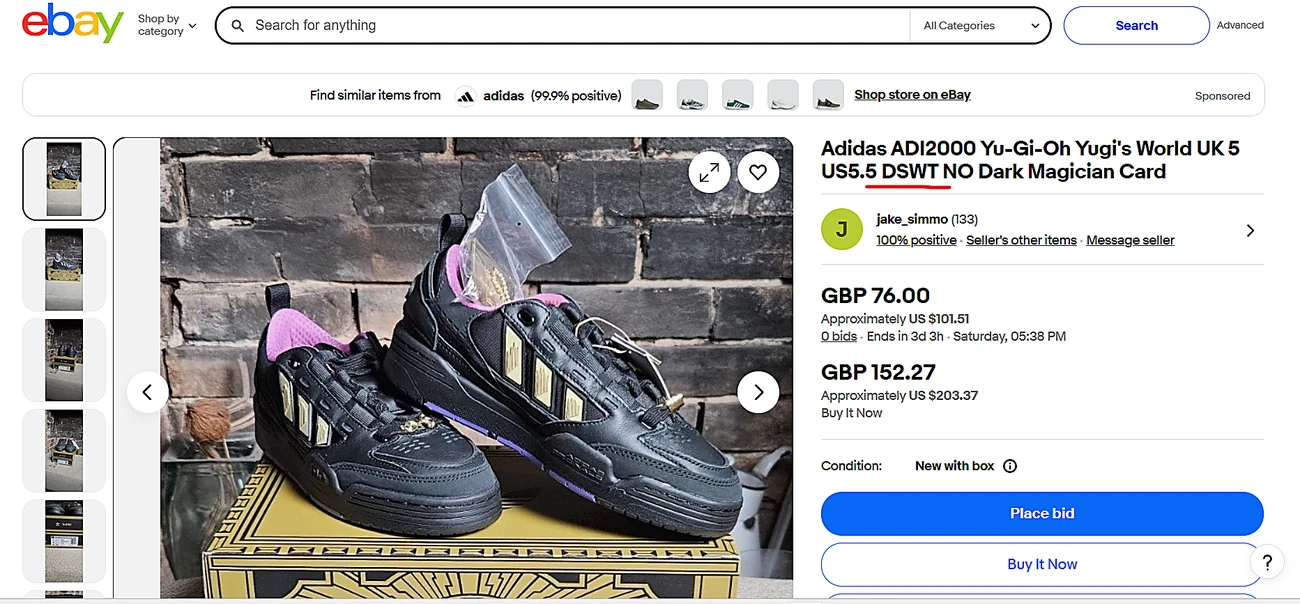
DSWT means Deadstock With Tags: a pair described as new and unworn with the relevant tags still present. The useful next question is “which tags, and are they attached or included?” The abbreviation alone does not authenticate a pair or establish its value.
For collectors, a surviving hangtag can be an appealing piece of a release’s original presentation. It is still only one part of the set. Wear history, box, accessories, material condition, and authenticity need their own checks.
What Does DSWT Mean?
In sneaker listings, deadstock generally means unworn, while “with tags” refers to tags associated with that particular release or retail presentation. There is no single tag that every Nike, Jordan, adidas, or other sneaker must have.
A removable brand hangtag, a retailer’s price tag, and the sewn-in size label are different things. A tag added by a resale platform or authentication service is also different from an original manufacturer’s tag. Ask sellers to identify exactly what is present.
Difference Between DSWT, DS, VNDS, and Used Sneakers
DS generally describes an unworn pair; DSWT adds tags but does not mean ordinary DS pairs lack them. VNDS is a subjective near-new condition description, often applied to a lightly worn pair. A lightly used shoe remains used even when visible wear is minimal.
NWT means new with tags, while NIB means new in box. These descriptions can overlap, but tags do not guarantee the box or every accessory. “OG all” concerns the completeness of the original set and can also describe a worn pair.
Why Do Tags Matter to Some Collectors?
Tags may matter to a collector seeking the original presentation, particularly when a release included a distinctive hangtag. They are not a seal of authenticity: tags can be copied, saved, or reattached, and a tag can remain attached while a shoe is tried on.
A DSWT description is more useful when supported by current photos of the actual pair and a clear account of its condition. It does not by itself justify a higher price or promise a quicker sale.
Characteristics of a DSWT Sneaker
Inspect the outsole, toe box, heel, lining, and insoles for signs of wear, then compare those observations with the seller’s description. No single crease, smell, or intact insole print settles the question; manufacturing, handling, and storage can also leave marks.
Check whether the tags are physically attached or simply included loose. Also confirm the original box, its condition, spare laces, and any release-specific accessories separately. DSWT is not the same as a complete, flawless set.
What Can Cause a Sneaker to Lose Its DSWT Status?
Outdoor wear is incompatible with describing a pair as unworn. Try-ons and detached tags are less consistently treated in community slang, so disclose them directly instead of assuming a universal DSWT rule.
An unworn pair can still develop yellowing, storage marks, mold, cracking, or failing materials. Describe those issues rather than hiding them behind DSWT. For an old pair, unworn does not mean structurally safe to wear.
Market Value of a DSWT Sneaker
There is no standard DSWT price premium. Compare the same release, size, condition, box, and accessories using recent completed sales where available. Asking prices alone do not tell you what buyers paid.
Original-era Air Jordans, Nike SB Dunks, and collaborations can interest collectors for very different reasons. Their value depends on the specific pair and demand; a tag does not make every example rare or valuable.
How to Preserve a DSWT Sneaker
Store the pair away from direct sunlight, excessive heat, and moisture, and check it periodically. Preserve the tags and packaging without letting them rub against delicate surfaces. Storage may reduce avoidable damage, but it cannot stop every material from aging.
Cleaning should respond to the actual material and condition rather than become a routine chemical treatment for an unworn pair. Before using a product, check material-specific cleaning instructions; vintage coatings, prints, and adhesives may be fragile.
How to Assess a DSWT Sneaker Transaction
For an online purchase through GOAT or another marketplace, check the seller, actual photos, return policy, and the exact buyer protections attached to the listing. Authentication eligibility and methods vary across marketplaces; a familiar platform name does not mean every listing receives the same inspection.
For a private sale, keep the agreed condition, included items, and payment terms in writing. Reputation can help you assess a seller, but it does not replace checking the pair itself or using an appropriate protected payment method.
Conclusion
Treat DSWT as the start of the description: unworn, with the relevant tags. Ask what came with the release, what remains attached, whether the pair was tried on, and what condition the shoes and packaging are in now.
The most useful listing describes the actual pair clearly. No abbreviation can promise authenticity, structural condition, or future appreciation.
FAQ: Frequently Asked Questions About DSWT
Is DSWT Different from DS?
DSWT adds a claim about tags to deadstock condition. A DS pair may also retain its tags; confirm what is included.
Can a DSWT Sneaker Be Tried On?
Try-on standards vary. Disclose any try-on and whether tags are attached or included. StockX, for example, permits certain tried-on pairs under its own Verified Marketplace rules; that is not a universal DSWT definition.
Is DSWT Worth More Than DS?
Not necessarily. Tags may interest some collectors, but they do not prove authenticity or create a fixed price premium.
Is It Safe to Buy DSWT Sneakers Online?
DSWT alone cannot make a purchase safe. Check the pair, seller, listing-specific authentication eligibility, payment protection, and return terms.
Compare other condition and packaging terms in the Sneakerhead Dictionary.