The shoe of a growing competitive identity
The Nike Zoom LeBron III entered the line in 2005. Nike’s own Home retrospective confirms the year, while its archive connects the model with LeBron’s first playoff experience in 2006. That pairing of product and competition gives the III a clear place in the story: it belongs to the transition from spectacular young prospect to a player whose season extended into the postseason. Nike’s archive documents that connection.
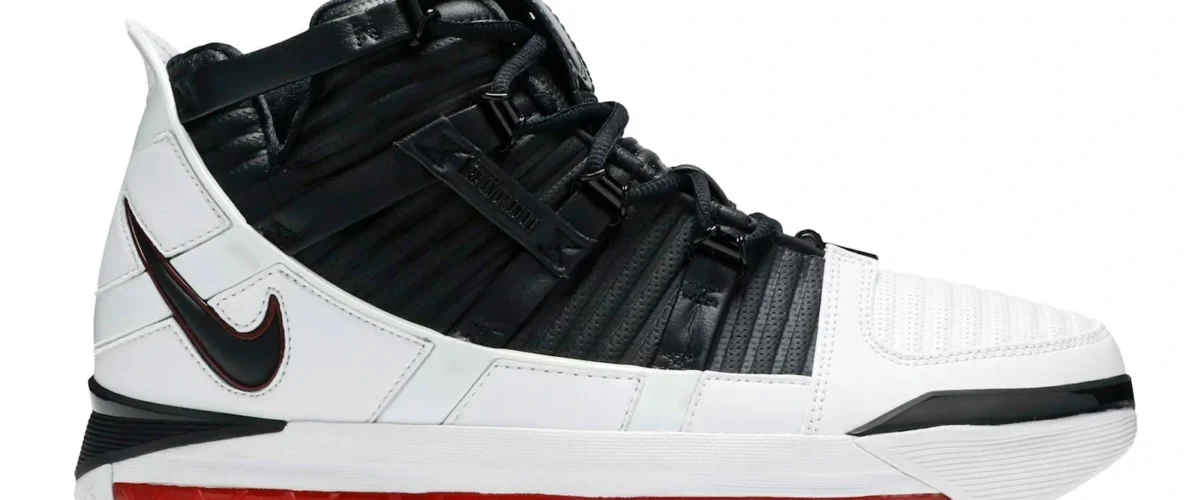
Ken Link continued as designer. Instead of presenting a soft visual transition from the II, the III emphasized a rugged, almost equipment-like appearance. Its tall stance and prominent lacing structures make it one of the easiest early LeBrons to recognize in a side-by-side lineup.
Model at a glance
- Original release: 2005
- Design: Ken Link
A substantial structure around Zoom Air
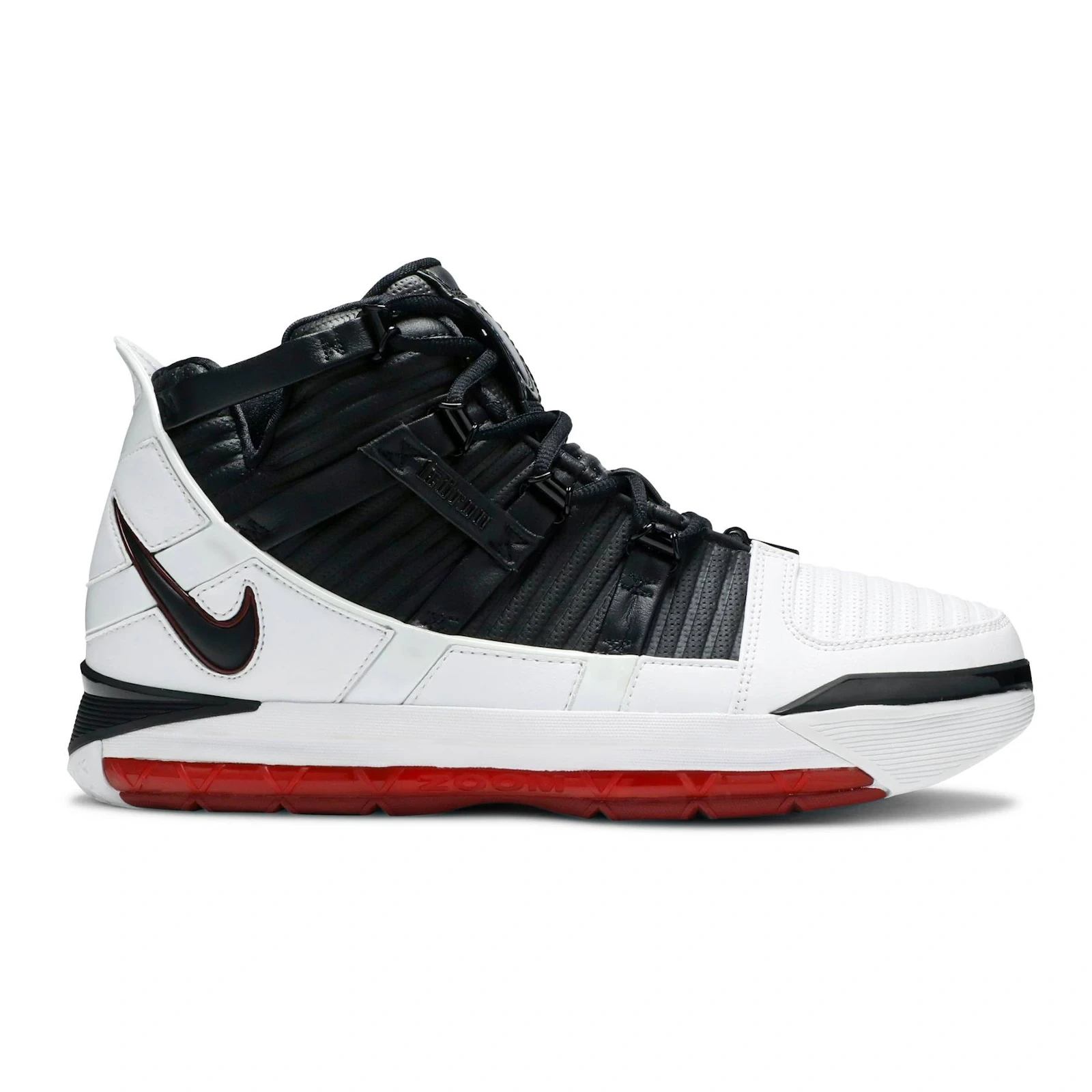
Zoom Air cushioning remained central, supported by a stabilizing structure and a substantial upper. Link’s design language put containment on display: the bands around the lacing do not disappear into a minimalist surface. They make the foot’s enclosure part of the shoe’s identity.
That is useful context for understanding the next generation. The III’s layered, angular construction establishes a visual baseline against which the IV’s molded curves look especially radical. A model history is more informative when it explains this relationship than when it simply labels every annual release revolutionary. Here, refinement and a stronger identity matter as much as any single feature.
Three original-era colorways
China, 2005
White, Varsity Crimson and chrome give the III a bright original-era presentation. The metallic details emphasize the prominent hardware-like elements. The edition also places the signature’s growing identity in a context beyond Cleveland’s home schedule.
Home, 2005
White, black and Varsity Crimson provide a clear Cavaliers-era reference. The lighter upper separates the lacing structures from the surrounding panels, making this an effective colorway for examining the design’s layered construction.
Black/Red, 2005
The darker original version concentrates the silhouette into a more unified mass. Red supplies separation without the Home edition’s large light areas. Comparing the two helps explain how color changes the visual weight of an otherwise shared structure.
The Low and a larger world of exclusives
The III Low followed in 2006. Documented retail palettes include White/Varsity Red-Black, White/White-Khaki and Black/Black-Ice Blue. Nike also records Gloria and USA Low exclusives, but those references must not be silently converted into general-release colorways.
The later Home retro demonstrates why color names need a production year. Nike describes an updated interpretation of the original palette, not a time capsule manufactured in 2005. Comparing both periods can be rewarding, but only after the objects have been identified correctly.
The III’s lacing components, collar and outsole give an editor several useful viewpoints beyond the standard side photograph. A front view shows how the fastening structures frame the tongue; a rear view reveals the tall stance. Together they explain the equipment-like character that a simple color list cannot capture.
Frequently asked questions
When was the LeBron III released?
In 2005. Its original playing season extends into 2006, including LeBron’s first playoffs.
Was there a LeBron III Low?
Yes, in 2006, with several retail palettes and additional player-exclusive versions.
Were Gloria and USA Low pairs ordinary retail releases?
Nike’s archive identifies them as exclusives. They should be labeled that way unless evidence establishes a specific public release.
Sources and further reading
- Nike: Inside the Vault, LeBron III
- Nike: Zoom LeBron III Home retro
- Sneaker News: LeBron III archive
- Nice Kicks: LeBron III launch colorway
- Kicksologists: LeBron III review and Ken Link quotation
Editorial research checked on October 16, 2026.