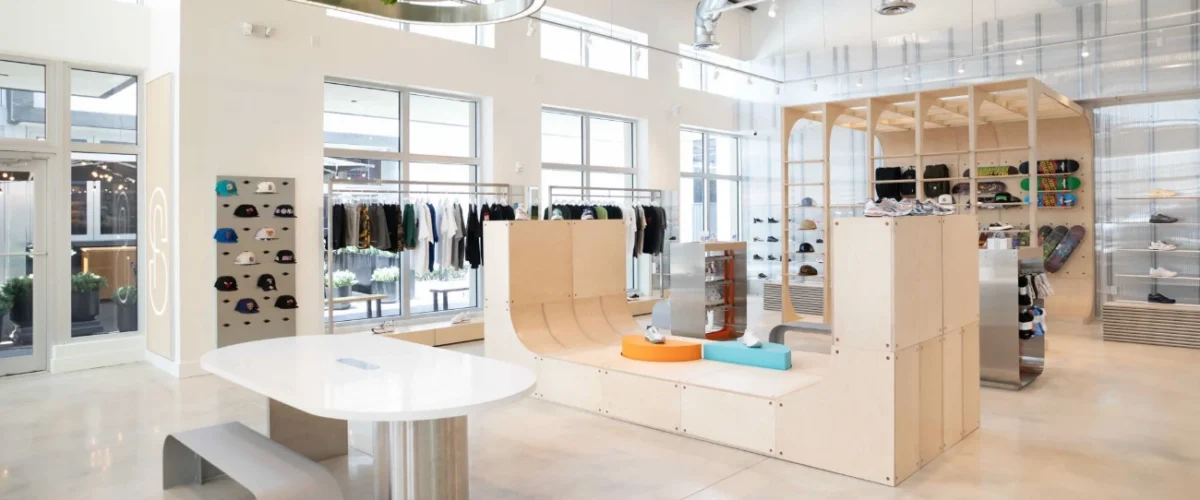
Behind one heel tab, the number 305. Behind another, an outline of Florida. Those details on the SoleFly Air Jordan 3 Lotto help explain the Miami boutique: the city becomes more than an address, supplying material for the interpretation of a sneaker.
SoleFly was established in 2010. Its own presentation emphasizes footwear stories and a place for enthusiasts to connect. The collaborations provide more concrete examples of how that intention took physical form.
Beginning in Miami
Understanding SoleFly means distinguishing the retailer from the manufacturers it works with. It did not create Air Jordan’s history, but it began adding its own chapters to models within that established vocabulary.
That distinction is useful for newcomers to sneakers. A silhouette supplies a recognizable structure; a boutique chooses references that change how the object is read. A small detail can carry local information absent from the original design.
For SoleFly, that Miami connection appears through projects drawing on Florida imagery and regional cultural references. It is more specific than simply describing a shoe as tropical.
Lotto: local detail and restricted circulation
The 2014 Air Jordan 3 Lotto was produced for friends and family of the boutique rather than a regular commercial launch. Sotheby’s catalog record describes lottery motifs on the insoles and Florida references hidden behind the heel tabs.
Its friends-and-family status matters to an accurate account. A collaboration can enter collectors’ imaginations without having been a product any customer could buy from the store at launch.
Rarity and content are also different things. Limited circulation explains historical availability, but it does not replace examining the design. Here, local elements make the idea understandable even to someone who will never handle an original pair.
The reference returns on another model
In 2018, SoleFly revisited the Lottery concept on the Jordan 88 Racer. The move shows an idea traveling between models: a visual reference established in one collaboration reappears on a different footwear structure.
For the boutique’s history, that continuity is more revealing than treating each release as an unrelated event. The projects begin forming a vocabulary recognizable to someone familiar with their origin.
It also gives a collector something to compare beyond market value. The question becomes how a theme changes when its proportions and available surfaces change.
Mi Casa es Su Casa
The Air Jordan 8 Mi Casa es Su Casa partnership celebrated Cuban heritage and culture. Nike’s official description connects its colors with the Cuban flag and highlights special graphics and the welcoming message on the box.
The reference changes, but the relationship with place and identity remains. Local culture need not appear through the same symbol every time: it can take the form of an area code, a graphic memory or a phrase about hospitality.
SoleFly’s trajectory becomes clearer when these chapters are considered together. The boutique’s interest within sneaker culture lies in making familiar models carry additional stories, offering enthusiasts a way to recognize Miami through details.
Sources and further reading
Sotheby’s: SoleFly Lotto, 2014
The Lottery theme returns in 2018
Nike: SoleFly Mi Casa es Su Casa
Related store histories
Shoe Gallery
Jordan World of Flight
For the wider context, explore Sneaker History and Culture: From Rubber Soles to a Global Movement.